
From Pain to Relief: Patient Returns to Normal Life After ASC Hernia Surgery

Running, hiking, biking on mountain trails and lifting weights help Dan Ivanciw stay strong and active. Strength training has always been part of his exercise routine, so he was used to lifting heavy things safely.
About 20 years ago, while carrying a 50‑pound microwave stand up a steep set of stairs, the Austin, Texas electrical engineer felt a sharp pain in his left groin.
The feeling was familiar to Dan, and he knew something was wrong.
“I’d already had a hernia before on my right side that I had gotten repaired, so I knew kind of what that felt like,” he said. “I was concerned maybe I had just caused another one.”
An inguinal hernia happens when tissue inside the abdomen pushes through a weak spot in the lower belly, creating a small bulge in the groin. Treatment options may include monitoring or surgery depending on symptoms and size.
 After visiting a doctor and because the discomfort was mild, Dan decided to wait before having it repaired.
Over the next 15 years, the hernia slowly grew into a noticeable bulge that interrupted Dan’s daily activities. To avoid pain, he had to be careful when reclining or bending. At times, he wore a hernia belt for extra support.
“I was limited in what I wanted to do, what I could do,” he said.
Internet Search Leads to Boston Hernia Surgeon, ASC Surgery
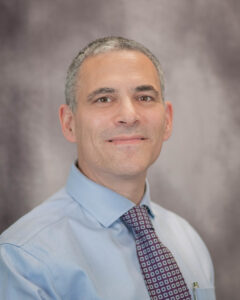 Two years ago, Dan began searching online for a U.S. surgeon who could perform a specialized no-mesh repair used for his first hernia. After months of research, he scheduled a consultation with Michael “Micki” Reinhorn, M.D., a board‑certified general surgeon who specializes in ambulatory hernia surgery near Boston.
Over a lifetime, roughly one in four men and a small percentage of women will experience an inguinal hernia.
“There’s a risk of the intestine getting stuck in a hernia that could lead to a life-threatening emergency. But for most people, it’s a quality-of-life operation,” Dr. Reinhorn said.
During his initial consultation, Dr. Reinhorn presented options for mesh and no-mesh hernia repair surgery, given that Dan’s hernia had reached roughly the size of an orange.
“We talked about the pros and cons of both,” Dr. Reinhorn said. “He made the decision that although he had a no-mesh repair in 1987, he was going to go with mesh behind the abdominal wall through the Open Pre-Peritoneal (OPP) repair approach that we specialize in.”
 The OPP surgical technique, which Dr. Reinhorn helped modernize, uses a gentle muscle spreading approach through a small keyhole incision to place mesh behind the muscles. With this approach to inguinal hernia surgery, patients avoid general anesthesia and still have mesh placed in the same exact location as a laparoscopic or robotic repair. This type of hernia repair is designed to help patients heal faster and get back to normal activities sooner.
“Patients go home within about an hour after surgery. I ask them to go for leisurely walks and just take it easy for a couple of weeks after surgery,” Dr. Reinhorn said. “After two weeks for a mesh repair, we lift all restrictions and let them go to the gym and work out. We tell them to gradually increase activity week three.”
Patient Ranks First ASC Experience as ‘Exceptional’
 Doctors determine whether patients are suitable for outpatient surgery based on factors such as age, existing medical conditions and the level of support available at home.
Dan scheduled his hernia repair surgery with Dr. Reinhorn on July 10, 2025, at Boston Out-Patient Surgical Suites. He described the experience as “exceptional” and said he would recommend same-day surgery to others.
“You could tell that everybody in that center knew the patients were likely to be nervous and uncertain of what was going to happen,” Dan said. “They were so friendly and nice. It was so easy, and they just made the whole process really go so smoothly.”
After surgery, Dan spent two weeks resting and recovering at a nearby hotel in Boston before his post-op visit. He followed the guidance of the care team and his surgeon for exercise. He said this recovery felt very different from the no-mesh repair he had years ago, but in a much better way.
“I didn’t feel any pain when I was lying down or sitting,” he said. “The only pains I found I had — and they were minor — were in the transitions getting up or laying back down.”
Nine months later, Dan enjoys an active lifestyle without pain or a hernia belt. He and his wife recently spent a week hiking through a national park, a state park and two historic forts in Texas.
“Now I can run. I don’t have any fear of causing an issue. It’s been great!” he said. “I work on cars, and I do my own lawn work and all of it. Bending over before — that was very difficult to do. I can do whatever I want now.”
Schedule an Appointment to Discuss Your Health
 If you are experiencing any health issues, like a hernia, schedule an appointment to talk to a specialist. Your surgeon may suggest that you schedule a procedure.
ASCs make it easier for patients to get the care they need with same day procedures, advanced technology and a comfortable environment. Efficiencies like scheduling, workflow and team coordination positively impact patient care.
“Everything about the ASC is geared for the patient experience to be safe, compassionate and efficient,” Dr. Reinhorn said. “It is very well coordinated. It’s geared about the patient experience; the whole process from beginning to end.”
Today, Dan shares his positive experience with others and offers advice to those needing hernia repair surgery.
“If I knew about Dr. Reinhorn and the surgery center sooner … I would have gotten it done years and years earlier, for sure,” he said. “With the hernia operation, it can come to a point where you’re not going to have the options and you’re going to suffer more for it. Get it checked earlier and get your surgery. You don’t have anything to fear.”
This article is designed for educational purposes only. The information provided should not be used for diagnosing or treating a health concern or disease. It is not a substitute for professional care. If you have or suspect you may have a health concern, you should consult your healthcare provider.